
Consider these images:
#1 A bare-chested male sex machine with a beautiful woman draped over him.
#2 A soberly dressed man with his wife on his arm and with them, five or six healthy, well-dressed children.
Which image was the ideal of the Georgian and Regency male?
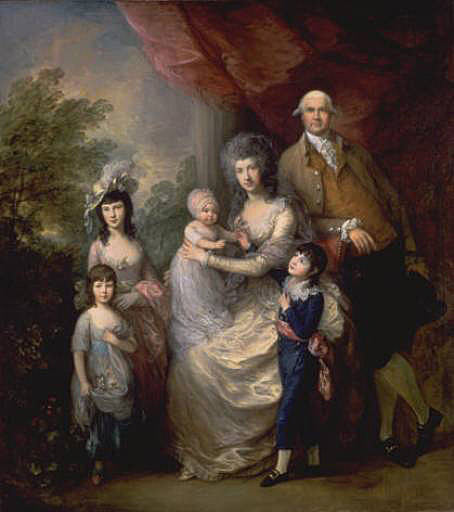
If you picked #2, you are correct.
#1 is an anachronism, today's popular image of the marriage-phobic male who dreads relinquishing his life of hedonistic pleasure for the so-called strangling bonds of matrimony.
#2 is the Georgian and Regency ideal of manhood--a man with proven fertility and who is also a good provider.
In Georgian and Regency England, everyone had a place, and that place was marriage.
Bachelorhood was the undesirable limbo a man must endure before he wed. Life for a bachelor consisted of work and a social life mainly with other bachelors. They worked together, lived together, and filled the coffee houses and chop houses.
At first, the bachelor might enjoy the freedom from parental control. But a single man had a lower status than his married brethren, and in time, the exclusive company of men palled. Men longed for adult feminine company. How did bachelors find marriageable women? With great difficulty. If they were lucky, their families and married friends offered access to single women, since the women stayed at home.
Besides enhanced status, a secure place in society, and most importantly, the ultimate proof of his manhood, marriage conferred practical benefits on a bachelor, and I'm not just talking about available sex.
Marriage has always had an economic component. All men, even wealthy men, worked, leaving them less time for the day-to-day necessities of life. They needed to eat, live somewhere and have their living quarters and clothes cleaned. In the 18th and 19th centuries, food preparation, laundry and cleaning were expensive and time-consuming. Since most men couldn't afford servants, they had to pay for these services. In the division of labor of the time, a wife would perform these tasks while she also warmed her husband's bed and cared for his children.
Yes, there were unhappy marriages as well as happy ones, but the promise of happiness plus the other benefits outweighed the possibility of misery in the minds of most men.
A good book with a whole chapter on this subject is Behind Closed Doors: At Home in Georgian England by Amanda Vickery. This book also includes the Regency.
So, the next time you encounter one of those high-born Regency rakes who disdain marriage, remember his realistic counterpart--the man who yearned to wed.
Thank you all,
Linda
Book cover: The Seduction by Nicole Jordan
Painting: The Baillie Family (c. 1784) by Thomas Gainesborough

